.jpg)
* PCBs are custom-made, picture & parameters for reference
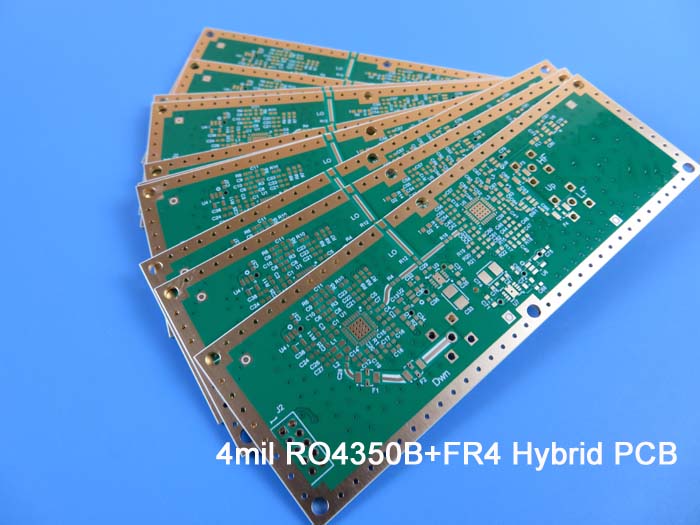
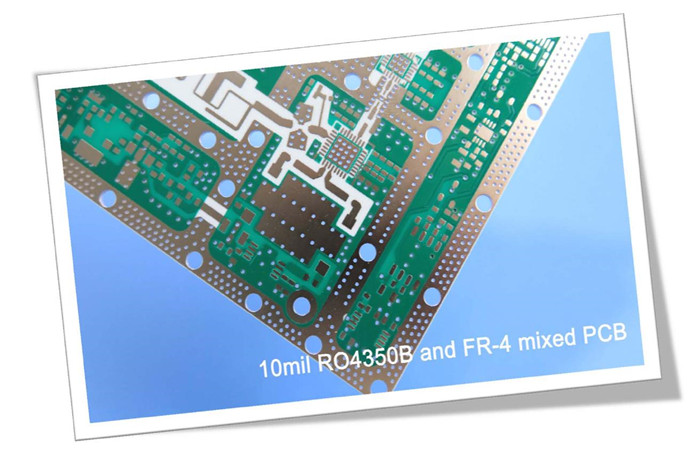
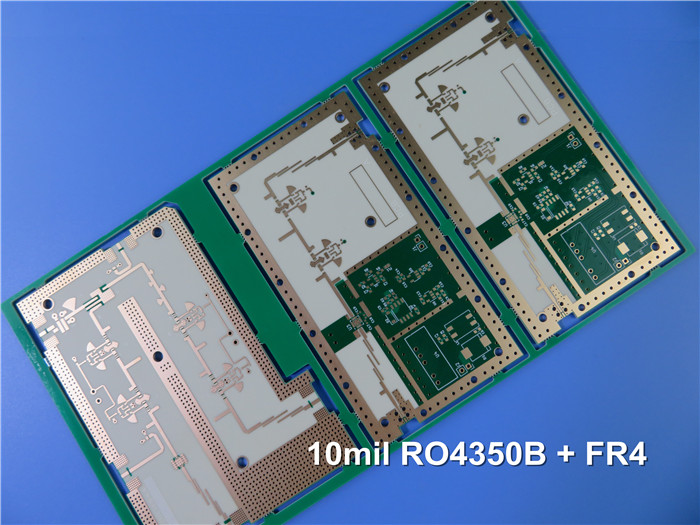
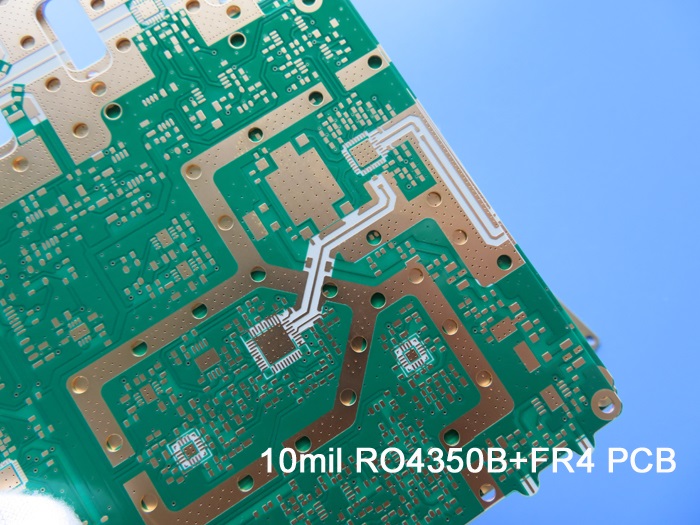
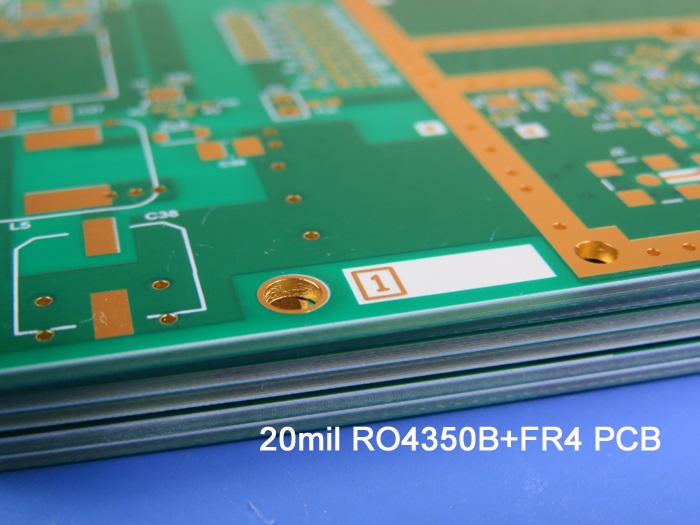
Hybrid PCB Mixed Material Circuit Board Different Materials Combined PCB RO4350B + FR4 + RT/duroid 5880 with Immersion Gold
(PCBs are custom-made products, the picture and parameters shown are just for reference)
Introduction
Hello Everyone,
Today, we will discuss hybrid PCBs, specifically those that integrate high-frequency materials with epoxy glass.
Understanding Hybrid PCB Structure
Let's examine the stack-up to grasp the hybrid configuration:
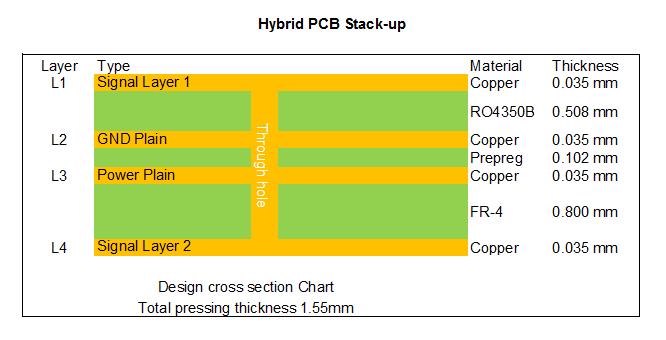
Layer 1 to layer 2 is the core of RO4350B high frequency material and layer 3 to layer 4 is the core of FR-4 epoxy glass. The 2 cores are bonded by a sheet of adhesive (prepreg).
Types of Hybrid PCB
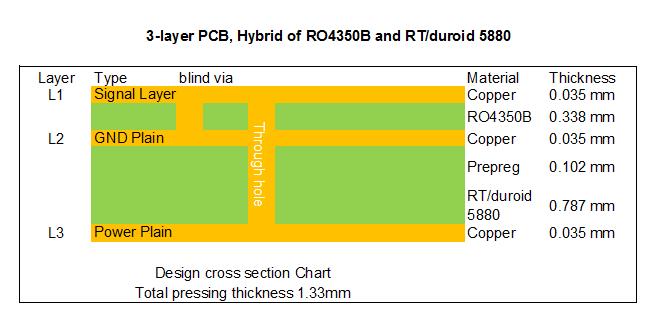
Hybrid PCBs can combine FR-4 with high-frequency materials, as mentioned above. Another type is a mixture of high frequency material with different dielectric constant (DK), for example RT/duroid 5880 and RO4350B etc.
Reasons to Use Hybrid PCBs
There are three primary reasons to opt for high-frequency multilayer PCBs: cost-effectiveness, enhanced reliability, and improved electrical performance.
1.Cost Efficiency: High-frequency materials are generally more expensive than FR-4. By using a hybrid of FR-4 and high-frequency materials, manufacturers can address cost concerns effectively.
2.Reliability Improvement: High Coefficient of Thermal Expansion (CTE) values in PCB materials can lead to reliability issues. Combining low CTE FR-4 with higher CTE materials results in an acceptable composite CTE, thereby enhancing reliability.
3.Tailored Electrical Performance: Different sections of a mixed PCB may require varying levels of electrical performance. For areas needing high performance, high-frequency materials are employed, while less demanding sections can use FR-4. Additionally, using materials with different DK values can improve electrical properties, particularly in combiners and filters.
Why Choose FR-4?
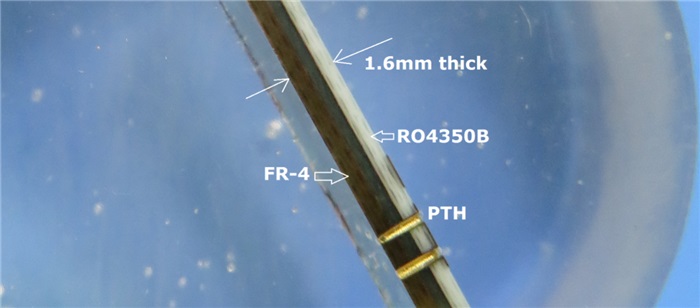
The combination of FR-4 and high-frequency materials is increasingly popular because FR-4 and the vast majority of high frequency materials have little compatibility problems.
To ensure reliable lamination, we select a prepreg sheet of high-frequency material and apply the appropriate pressing cycle. Using an adhesive layer made from the same material simplifies the pressing process.
Our PCB Capability (Hybrid PCB)
| PCB Type: | Hybrid PCB, Mixed PCB |
| Hybrid type: | RO4350B + FR4 |
| RO4003C + FR4 | |
| F4B + FR4 | |
| RT/duroid 5880 + FR4 | |
| RT/duroid 5880 + RO4350B | |
| RO3000 Series + FR4 | |
| RT/duroid + FR4 | |
| Solder mask: | Green, Red, Blue, Black, Yellow |
| Layer count: | 4 Layer, 6 Layer, Multilayer |
| Copper weight: | 1oz (35µm), 2oz (70µm) |
| PCB thickness: | 1.0-10mm |
| PCB size: | ≤400mm X 500mm |
| Surface finish: | Bare copper, HASL, ENIG, Immersion tin, Immersion silver, OSP, ENEPIG, Pure gold |
Thank you for reading! Feel free to contact us for any PCB inquiries.
Get a Quick Quote
Fill in the form below and our engineers will reply within 24 hours with technical specifications and pricing for Hybrid PCB (RO4350B + FR4 + RT/duroid 5880).

.jpg)
.jpg)